
How to Kick Higher in Karate
Improve your Karate kicking height using targeted dynamic stretches, hip mobility exercises, and essential whip kick drills.
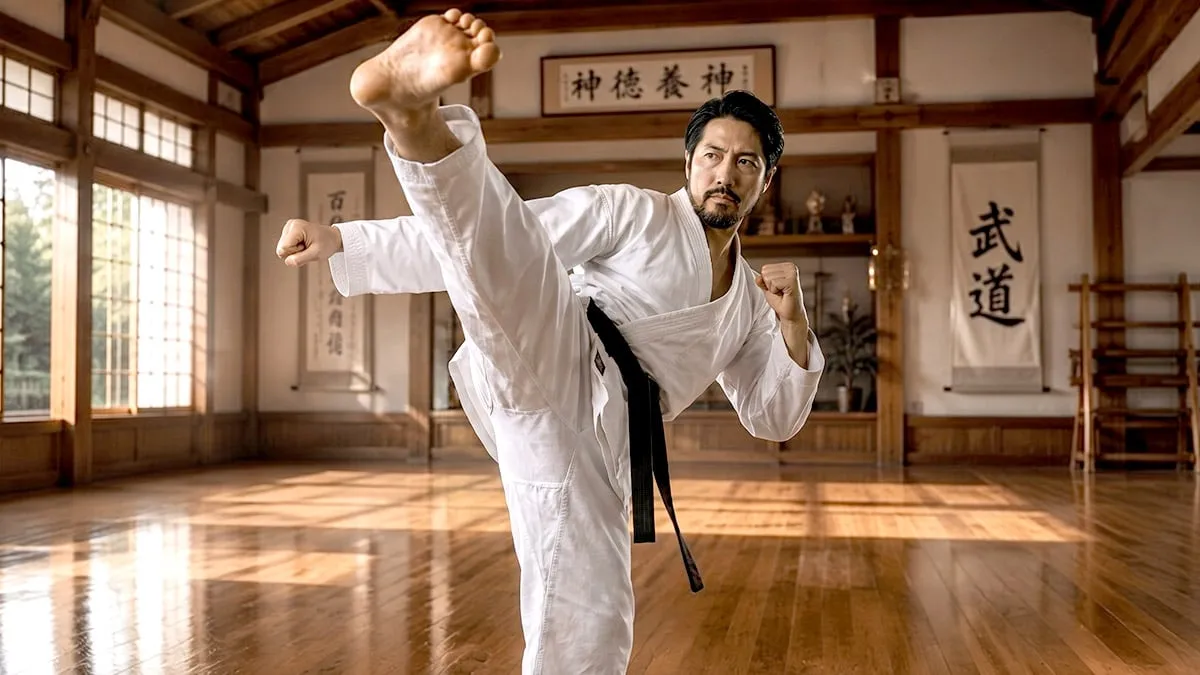
To kick higher karate practitioners must develop a combination of active hip flexibility, hamstring length, and core stability. Simply forcing your leg upward without preparation can lead to injury and poor balance. Instead, you must systematically prepare your body by mobilizing your joints, stretching your muscles, and practicing correct kicking mechanics.
Achieving a clean karate high kick requires targeting specific muscle groups. Mobilizing the hips and stretching the hamstrings allows you to raise your leg without resisting your own body's natural tension. Combining these stretches with dynamic drills ensures you can deliver high-level strikes while maintaining your balance and guard.
Mobility Drills for Hip Flexibility for Kicks
To execute high kicks with speed and precision, you must first unlock your hips. Tight hips restrict your range of motion and force your lower back to compensate, which ruins your balance. Incorporating mobility drills before your training session helps prepare the joints for a wider range of motion.
Essential Hip Mobility Exercises
- Hip Circles Stand with your feet shoulder-width apart. Rotate your hips in a circular motion while keeping your upper body stable and relaxed. Move your hips smoothly in both directions. To get the most out of this, keep your hips relaxed to ensure smooth and controlled circles, maintain a steady rhythm to build coordination, and engage your core muscles for better balance.
- Standing Hip Twist Stand with your feet shoulder-width apart. Twist your hips to one side while keeping your upper body straight, then return to the starting position and twist to the other side. Repeat the movement smoothly. Engage your core to maintain balance and control throughout, and keep your upper body relaxed to allow fluid hip rotation.
Hamstring Stretches for High Kick Flexibility
High kick flexibility depends heavily on the length of your hamstrings. If your hamstrings are tight, your leg will pull downward before you can reach head height. Developing long, compliant hamstring muscles allows for a smoother release during techniques like the Front Kick.
Hamstring Stretching Routine
- Hamstring Both Legs Stand with your feet shoulder-width apart. Bend at the waist and reach for your toes, keeping both legs straight. Hold the stretch for a few seconds, then return to a standing position slowly. Engage your core and keep your upper body relaxed to avoid unnecessary tension, and activate your hamstrings for maximum stretch.
- Hamstring Crouch - Left and Right Lower yourself into a crouching position on one leg while extending the other leg straight forward. Reach toward your extended foot with both hands, hold the stretch briefly, and return to standing. Switch sides to ensure both legs are balanced. Move slowly and with control to develop strength, keeping your supporting foot stable to maintain proper alignment.
Standing Splits for Vertical Height
To transition your flexibility into vertical height, you must practice standing splits. These exercises mimic the exact body alignment needed for advanced kicks like the High Kick.
Standing Split Progressions
- Standing Split Stand on one leg and lift the other as high as possible, keeping your standing leg straight for balance. Try to touch your raised foot with your hands, hold for a few seconds, and lower your leg slowly. Keep your hips square to avoid losing balance, and breathe deeply to relax into the position.
- Standing Split Arms to Leg (Left and Right) Stand on your supporting leg and lift the other leg straight up. Reach your hands toward your raised foot and hold the position briefly before lowering slowly. Keep your supporting leg strong and slightly bent to avoid unnecessary tension, and relax your upper body while extending your leg.
- Standing Split Alternate Arms to Leg Stand straight with your feet shoulder-width apart. Raise one leg as high as possible while keeping the other leg straight, reaching your opposite hand toward the lifted foot. Switch legs and arms in a controlled, continuous motion. Keep your body relaxed to maintain fluidity and focus on a steady rhythm.
Building Dynamic Snap with the Whip Kick
Flexibility alone is not enough to execute a karate high kick; you must also train the dynamic snap of your leg. The whip kick is an excellent drill to build the fast, snapping motion needed for high-level Karate kicks without sacrificing your posture.
How to Perform the Whip Kick
- Lift the Knee Quickly lift your knee, bending your leg towards your chest (or to the side if practicing the double-sided variation).
- Snap and Strike Whip your foot outward in a snapping motion, striking with the top of your foot or the instep.
- Retract and Recover Retract your leg immediately after impact and return to your guard position.
Keep your body and legs relaxed to generate a faster, whip-like motion. Engage your core to maintain balance, and snap your kick at the last moment for maximum impact. Control your retraction speed to improve your recovery and protect your stance from counterattacks.
Structured Training Programs
To see consistent progress in your kicking height, you should integrate these stretches and drills into a structured routine. Random stretching rarely yields long-term results.
For beginners or those returning to training gently, the Basic Kicks program offers a 25-minute routine focusing on fundamental leg control and balance. If you want to unlock advanced height and speed, the Kicks Mastery program provides targeted training designed to perfect your kicking mechanics.
Related programs
 Kicks Mastery Programs · 25 min
  Basic Kicks Programs · 25 min
 Was this helpful?
Thanks for your feedback!
Comments
No comments yet — be the first.